
On the Back Porch
Reading, pondering and studying God’s Word is sometimes best done “on the back porch.” Each week we will try to offer something for you and your “back porch time.”

3rd Sunday of Easter
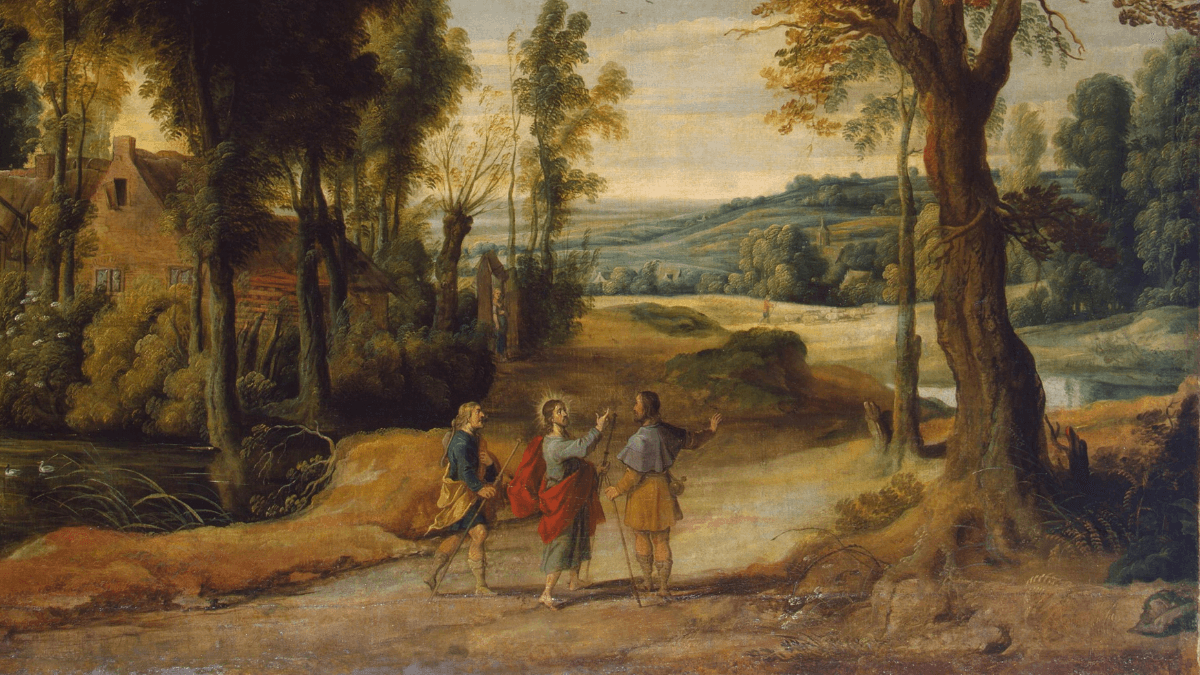
The Road
The story of the two disciples on the road to Emmaus is part of the unfolding narrative of the events of the first “Easter Sunday.” As one would expect, their hopes were crucified on Good Friday: “we were hoping that he would be the one to redeem Israel.” In their minds and hearts, those hopes lay buried in the tomb. They note that “Some women from our group, however, have astounded us: they were at the tomb early in the morning and did not find his body; they came back and reported that they had indeed seen a vision of angels who announced that he was alive.” But later went back to the site and could only verify that the tomb was empty. And now the rumors are swirling about and filling up the void of actually knowing what happened. Disheartened, they are heading home.
This is when they meet the stranger on the way. The narrative forms an outline of the Mass with a nascent liturgy of the Word and of the Eucharist. “Then beginning with Moses and all the prophets, [Jesus] interpreted to them what referred to him in all the Scriptures.” Later the two will remark that their hearts were burning within them. It is later at table that they recognize Jesus in the breaking of the bread.
The account is another of the unfolding events of that first Easter Sunday but it also outlines the hopes for your participation in Mass. The heart and mind inflamed by the Word of God, leading to a recognition of the Real Presence of Jesus in the Eucharist.
You can find the full text of the Sunday gospel here. And if you are interested in a detailed commentary, one is available here.
Proclaiming the Good News
In the first reading we continue to follow the Apostles and disciples as they move from the Upper Room into Jerusalem to begin their mission of evangelization. The scene follows the imparting of the Holy Spirit at Pentecost. The speech contains all the elements of the kerygma, related to the Greek verb κηρύσσω (kērússō), literally meaning "to cry or proclaim as a herald" and being used in the sense of "to proclaim, announce, preach". Amongst biblical scholars, the term has come to mean the core of the early church's teaching about Jesus. And that is exactly what Peter does.
Previously we offered Part 1 of 2 of an overview of the Acts of the Apostles. Now we provide Part 2. Enjoy.